Course Syllabus
Introduction
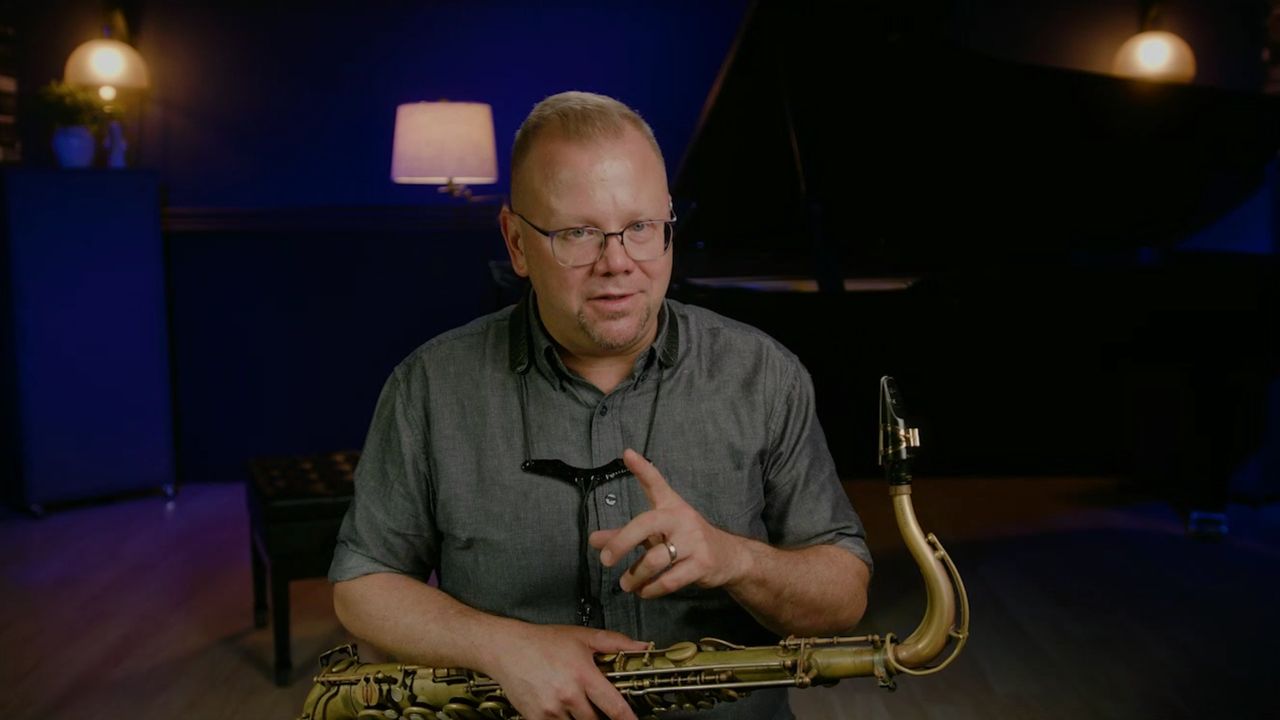
Jazz improvisation doesn't have to feel intimidating. Dan Pratt shares the basic mindset and key pillars of improvising in context: time, melody, rhythm, and transcribing.
Time
Discover how limited choices and precise rhythmic placement can jumpstart your improvisation journey with clarity and groove
Melody: Arpeggios
Explore how arpeggios and scales in thirds are simple but powerful tools for improvisation.
Melody: Cells
Brief melodic cells and fragments might seem too basic for improvisation, but they form a central part of a flexible, varied improvisational voice.
Melody: Modes
Just as transposing into different keys is an important part of improvisation, so is going between the major and minor mode. Learn how and when to switch from major to minor based on the harmony of the tune you're soloing over.
Rhythm
Unlock the feel of jazz by combining rhythmic cells with melodic ideas to create groove, swing, and expressive variation in your solos.
Transcribing
Develop your ear and improvisational vocabulary through singing, playing, memorizing, and analyzing solos by the masters.
Common Issues
Identify and overcome the most common obstacles in beginning improvisation, from rhythmic stiffness to melodic hesitation.
Click here to download the course workbook PDF and see the full syllabus →